
Trauma and Recovery: Understanding Psychological Trauma, Healing, and Building Resilience

Table of Contents
What Is Psychological Trauma?
Why Understanding Trauma Matters
The Science Behind Trauma
The Brain and Trauma
Types of Trauma
Common Signs and Symptoms
Trauma and the Body
The Recovery Process
Building Resilience
When to Seek Professional Help
Key Takeaways
Frequently Asked Questions
Conclusion
Introduction: Healing Begins with Understanding
Life is filled with experiences that shape who we become.
Many experiences bring joy, growth, and meaningful memories. Others, however, can be deeply distressing and leave lasting emotional wounds that continue to affect thoughts, emotions, relationships, and daily life long after the event has passed.
These experiences are known as psychological trauma.
Trauma is not simply about what happened to someone—it is about how the mind and body respond to overwhelming events. Two people may experience the same situation yet react differently depending on their life experiences, coping skills, support systems, and individual resilience.
Trauma-related difficulties can follow experiences such as serious accidents, violence, abuse, disasters, war, or other events that are experienced as deeply threatening or overwhelming. Repeated adversity can also have lasting effects on mental health. However, chronic stress and difficult experiences do not automatically mean that a person has psychological trauma or PTSD. People respond differently depending on the event, personal history, support, and other circumstances.
The effects of trauma are often invisible.
Someone may appear calm on the outside while silently struggling with anxiety, emotional numbness, intrusive memories, difficulty trusting others, or constant feelings of fear. Trauma can influence not only emotional well-being but also physical health, decision-making, concentration, relationships, and overall quality of life.
The encouraging news is that healing is possible.
Modern psychology and neuroscience have shown that the human brain has an incredible ability to adapt and recover. With appropriate support, healthy coping strategies, patience, and in some cases professional treatment, many people gradually regain emotional balance and rebuild fulfilling lives.
Recovery does not always mean forgetting what happened.
Instead, it often means learning to live with the experience in a way that no longer controls your thoughts, emotions, or future.
In this comprehensive guide, you’ll learn what psychological trauma is, how it affects the brain and body, the different types of trauma, common signs and symptoms, the science behind recovery, and practical ways to build resilience while supporting long-term emotional well-being.
🧠 Did You Know?
After a potentially traumatic event, people may experience emotional and physical reactions such as anxiety, sadness, sleep difficulties, problems concentrating, or repeatedly thinking about what happened. For many people, these reactions lessen over time; persistent or severe symptoms may require professional support.
Trauma Recovery at a Glance
| Trauma Can Affect | Common Examples |
|---|---|
| Thoughts | Intrusive memories, negative beliefs |
| Emotions | Fear, sadness, anxiety, emotional numbness |
| Behavior | Avoidance, withdrawal, irritability |
| Physical Health | Sleep problems, fatigue, muscle tension |
| Relationships | Difficulty trusting others, social isolation |
🧠 Psychology Fact
Psychologists recognize that trauma affects people differently. The intensity of an event alone does not determine whether someone develops trauma-related difficulties. Personal history, available support, coping skills, and individual resilience all influence how a person responds and recovers.
What Is Psychological Trauma?
Psychological trauma is the emotional and psychological response to events that are deeply distressing, frightening, or overwhelming. These experiences may challenge a person’s sense of safety, control, or ability to cope.
Trauma is not a sign of weakness.
It is a natural human response to situations that overwhelm the mind’s normal ability to process difficult experiences.
Trauma may develop after events such as:
- Serious accidents.
- Physical, emotional, or sexual abuse.
- Domestic violence.
- Natural disasters.
- War or conflict.
- Sudden loss of a loved one.
- Bullying or harassment.
- Medical emergencies.
- Childhood neglect.
- Repeated exposure to highly stressful situations.
Not everyone exposed to these experiences develops long-term trauma, and that is completely normal. Human responses vary because every person has different life experiences, personality traits, support systems, and coping abilities.
Psychological trauma may affect the way people think, feel, behave, and relate to others. It can also influence physical health because the brain and body remain closely connected during and after stressful experiences.
Understanding trauma is the first step toward recognizing that healing is possible.
Why Understanding Trauma Matters
Trauma often goes unnoticed because its effects are not always visible.
Someone experiencing trauma may continue going to work, attending school, or carrying out daily responsibilities while privately struggling with fear, emotional exhaustion, sleep problems, or difficulty concentrating.
Without understanding trauma, people may incorrectly judge themselves or others as being “weak,” “overreacting,” or “unable to move on.”
Psychology teaches us that trauma is far more complex.
It changes the way the brain processes memories, emotions, and perceived threats. As a result, reactions that seem confusing from the outside often become understandable when viewed through the lens of trauma.
Greater awareness also helps reduce stigma surrounding mental health and encourages individuals to seek appropriate support earlier.
Early understanding and intervention often improve recovery and reduce the long-term impact of traumatic experiences.
👉 Related Reading: Workplace Mental Health: Why It Matters, Common Challenges, and Practical Strategies for a Healthier Work Life Workplace Mental Health
The Science Behind Trauma
When the brain perceives danger, it activates the body’s natural survival system.
This response is commonly known as the fight, flight, or freeze response.
Stress hormones such as adrenaline and cortisol are released rapidly, preparing the body to respond to immediate threats.
During genuine emergencies, this biological response helps protect us.
However, following traumatic experiences, the brain may continue reacting as though danger is still present—even when the situation has become safe.
As a result, some individuals remain constantly alert, easily startled, emotionally overwhelmed, or physically tense.
Traumatic experiences can affect systems involved in threat detection, attention, memory, emotion, and stress regulation. After a frightening event, some people remain highly alert or react strongly to reminders of what happened. These responses can gradually decrease for many people, while others develop persistent symptoms that interfere with daily life.
Recovery is not simply a matter of “thinking positively.” It may involve supportive relationships, practical coping strategies, and, when needed, evidence-based mental health treatment.
Understanding this biological process helps explain why trauma is not simply a matter of “thinking positively” or “moving on.”
Recovery often involves gradually helping both the brain and body feel safe again.
👉 Related Reading: Neuroplasticity and Brain Health: How Your Brain Adapts, Learns, Heals, and Changes Throughout Life
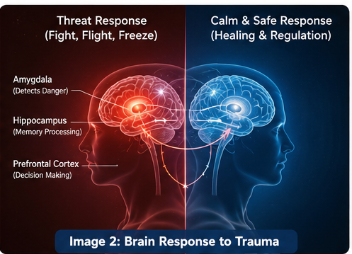
The Brain and Trauma
Psychological trauma can influence several interconnected brain systems involved in threat detection, memory, attention, emotion, and decision-making. It is more accurate to think of trauma as affecting interacting brain networks rather than one specific “trauma center.”
The amygdala is part of a broader network involved in detecting emotionally significant or threatening information. After a traumatic experience, some people may become more reactive to reminders associated with the event.
The hippocampus plays an important role in learning and memory and helps place experiences in context. Trauma-related symptoms can include unwanted memories, distressing dreams, or strong reactions to reminders of the event.
The prefrontal cortex contributes to attention, planning, decision-making, and aspects of emotional regulation. High levels of stress can make these functions more difficult in some situations.
These responses do not mean that the brain has been permanently damaged. Brain and behavioral functioning can change over time, and appropriate treatment and support can help people recover.
👉 Related Reading: Neuroplasticity and Brain Health: How Your Brain Adapts, Learns, Heals, and Changes Throughout Life Neuroplasticity and Brain Health
Types of Psychological Trauma
Trauma is not the same for everyone.
Psychologists generally recognize several forms of trauma depending on the nature and duration of the experience.
Acute Trauma
Acute trauma results from a single overwhelming event.
Examples include:
- Serious accidents.
- Natural disasters.
- Physical assault.
- Sudden loss of a loved one.
- Medical emergencies.
Although some people recover naturally over time, others may continue experiencing emotional or psychological difficulties that benefit from additional support.
Chronic Trauma
Chronic trauma develops after repeated or ongoing exposure to stressful situations.
Examples include:
- Long-term abuse.
- Domestic violence.
- Childhood neglect.
- Continuous workplace harassment.
- Living in unsafe environments.
Because exposure continues over long periods, chronic trauma may have a significant impact on emotional well-being, relationships, and self-confidence.
Complex Trauma
Complex trauma usually results from multiple traumatic experiences occurring over extended periods, particularly during childhood or within close relationships.
It may influence:
- Emotional regulation.
- Self-esteem.
- Identity.
- Trust.
- Relationship patterns.
Recovery often involves addressing both past experiences and their long-term emotional effects.
Secondary or Vicarious Trauma
Sometimes trauma develops without directly experiencing the original event.
Healthcare professionals, emergency responders, therapists, caregivers, journalists, and family members may experience emotional distress after repeated exposure to other people’s traumatic experiences.
Recognizing secondary trauma helps ensure that caregivers also receive appropriate emotional support.
🧠 Psychology Fact
Research suggests that supportive relationships and early intervention may reduce the long-term impact of traumatic experiences and strengthen emotional resilience during recovery.
Common Signs and Symptoms of Trauma
Trauma affects people differently.
Some individuals experience symptoms immediately after an event, while others notice changes weeks, months, or even years later.
Common emotional signs include:
- Persistent fear.
- Anxiety.
- Sadness.
- Emotional numbness.
- Mood swings.
- Feelings of guilt or shame.
Common thinking-related symptoms include:
- Difficulty concentrating.
- Intrusive memories.
- Negative self-beliefs.
- Confusion.
- Constant worrying.
Behavioral changes may include:
- Avoiding reminders of the event.
- Social withdrawal.
- Irritability.
- Difficulty trusting others.
- Increased sensitivity to stress.
Physical symptoms can include:
- Fatigue.
- Sleep disturbances.
- Headaches.
- Muscle tension.
- Digestive discomfort.
- Increased heart rate during stressful situations.
Experiencing one or more of these symptoms does not automatically mean someone has a specific mental health condition. However, if symptoms are persistent, distressing, or interfere with daily life, seeking support from a qualified mental health professional is recommended.
Trauma and the Body
Trauma-related stress can involve both psychological and physical responses. People may experience changes in sleep, muscle tension, fatigue, headaches, digestive discomfort, or increased physical arousal.
These symptoms do not prove that a person has PTSD, and physical symptoms can have many possible causes. Persistent or unexplained symptoms should be discussed with an appropriate healthcare professional.
Because mental and physical well-being are closely connected, recovery can include adequate sleep, physical activity, social support, relaxation strategies, and professional care when appropriate.
👉 Related Reading: Human Behavior: Understanding Why People Think, Feel, and Act the Way They Do The Psychology of Motivation
Trauma, PTSD, and Recovery
Some people develop Post-Traumatic Stress Disorder (PTSD) after experiencing or witnessing a potentially traumatic event. PTSD is a mental health condition involving persistent symptoms such as re-experiencing the event, avoidance of reminders, changes in mood or thinking, and heightened arousal or reactivity. For a diagnosis, symptoms must persist for more than one month and cause significant difficulties in daily functioning.
PTSD may involve symptoms such as persistent intrusive memories, nightmares, avoidance of reminders, heightened alertness, and significant emotional distress that lasts for an extended period and affects daily functioning.
It is important to remember that:
- Not everyone who experiences trauma develops PTSD.
- Trauma responses vary from person to person.
- PTSD is a recognized mental health condition that can be treated.
- Early support often improves recovery outcomes.
If someone experiences persistent symptoms after a traumatic event, consulting a qualified mental health professional is an important step toward recovery.

The Recovery Process: Healing Is Possible
Recovering from trauma is rarely a straight path.
Some days may feel hopeful and empowering, while others may bring unexpected emotional challenges. This is a normal part of healing. Recovery does not mean completely forgetting what happened. Instead, it involves learning to regain a sense of safety, reconnect with yourself, and build a meaningful life beyond the traumatic experience.
Healing takes time, patience, self-compassion, and often the support of trusted people or qualified professionals.
Recovery does not follow one fixed sequence. Different people may benefit from different forms of support at different times. The following are common elements that may contribute to recovery.
1. Acknowledging the Trauma
Healing often begins by recognizing that a traumatic experience has affected your life.
Many people minimize their experiences or believe they should simply “move on.” However, acknowledging emotional pain is not a sign of weakness—it is an important first step toward recovery.
Accepting that your reactions are understandable responses to overwhelming experiences reduces self-blame and encourages healing.
2. Seeking Support
Recovery becomes easier when people do not face it alone.
Support may come from:
- Trusted family members.
- Close friends.
- Support groups.
- Counselors.
- Psychologists.
- Psychiatrists when appropriate.
Talking to supportive individuals can reduce feelings of isolation and provide emotional reassurance during difficult times.
Professional support is particularly valuable when trauma significantly affects daily functioning, relationships, work, or overall well-being.
3. Processing Emotions
Trauma often involves emotions that were never fully expressed or processed.
Healing involves gradually learning to recognize emotions without becoming overwhelmed by them.
Healthy emotional processing may include:
- Talking with a therapist.
- Writing in a journal.
- Creative expression through art or music.
- Mindfulness practices.
- Relaxation exercises.
In some evidence-based therapies, people work through memories and emotions at a pace suited to their needs. A qualified professional can help decide whether and how this kind of work is appropriate.
4. Developing Healthy Coping Skills
Recovery is strengthened by replacing unhealthy coping behaviors with healthier alternatives.
Helpful coping strategies include:
- Regular physical activity.
- Deep breathing exercises.
- Meditation.
- Mindfulness.
- Healthy sleep habits.
- Balanced nutrition.
- Spending time in nature.
- Maintaining supportive relationships.
These habits help regulate the nervous system while improving emotional resilience.
👉 Related Reading: Mindfulness and Mental Well-Being Mental Wellness
5. Rebuilding Confidence and Identity
Trauma sometimes changes how people see themselves.
Some individuals lose confidence, question their self-worth, or feel disconnected from their identity.
Recovery involves gradually rebuilding confidence through small achievements, healthy relationships, meaningful goals, and self-compassion.
Healing does not erase the past.
It helps people move forward with greater strength, wisdom, and resilience.

Building Resilience After Trauma
Resilience is the ability to adapt, recover, and continue moving forward despite adversity.
Being resilient does not mean never feeling emotional pain.
Instead, resilience means developing the skills and support needed to recover while continuing to grow.
Research suggests that resilience can be strengthened through intentional habits.
Helpful practices include:
- Building supportive relationships.
- Practicing gratitude.
- Maintaining healthy routines.
- Learning problem-solving skills.
- Setting realistic goals.
- Practicing self-compassion.
- Staying physically active.
- Seeking help when needed.
Many people discover strengths they never realized they possessed while working through difficult experiences.
👉 Related Reading: Positive Psychology: The Science of Happiness, Well-Being, and Human Flourishing Positive Psychology
Professional Support and Therapy
Although family and friends provide valuable support, professional treatment is sometimes the most effective path toward recovery.
Mental health professionals use evidence-based approaches that help people understand and process traumatic experiences safely.
Depending on individual needs, treatment may include:
- Trauma-focused cognitive behavioural therapy, including approaches such as Cognitive Processing Therapy and Prolonged Exposure.
- Eye Movement Desensitization and Reprocessing (EMDR), when clinically appropriate.
- Other evidence-based trauma-focused approaches, selected according to the person’s needs, preferences, and clinical assessment.
- Medication may be considered by a qualified healthcare professional for some people, depending on symptoms and circumstances.
The most appropriate approach depends on each person’s unique circumstances and should be discussed with a qualified mental health professional.
Seeking help is a sign of strength—not weakness.
Timely access to appropriate care can support recovery, although outcomes and timelines vary from person to person.
Common Myths About Trauma
Many misunderstandings about trauma prevent people from seeking support.
Myth 1: Time heals all trauma.
Reality: Time alone does not always heal trauma. Recovery often involves support, healthy coping strategies, and sometimes professional treatment.
Myth 2: Only life-threatening events cause trauma.
Reality: Events beyond those that are life-threatening can still be deeply distressing and affect mental health. However, not every distressing experience meets the clinical criteria for PTSD; diagnosis requires an appropriate assessment.
Myth 3: Strong people don’t experience trauma.
Reality: Trauma can affect anyone regardless of age, personality, or strength.
Myth 4: Talking about trauma makes it worse.
Reality: Discussing traumatic experiences can be part of treatment, but people should not be pressured to disclose details before they are ready. A qualified professional can help determine an appropriate and safe therapeutic approach.
Trauma vs. Normal Stress
| Normal Stress | Psychological Trauma |
|---|---|
| Often eases as the situation resolves or support improves | May have lasting effects |
| May persist and affect daily life | May continue long after the event |
| Daily life challenges | Overwhelming experiences |
| Stress response returns to normal | Nervous system may remain highly alert |
| Often manageable independently | Sometimes requires professional support |
Understanding the difference encourages earlier recognition and appropriate support.
A Deeper Perspective
Trauma may become part of your story.
But it does not have to become your identity.
Healing does not mean pretending the past never happened.
It means gradually learning that your future can become larger than your pain.
Every step toward recovery—no matter how small—is meaningful.
Growth often begins with hope, support, and the courage to continue moving forward.
Key Takeaways
- Psychological trauma affects the mind, body, emotions, and behavior.
- Everyone responds to trauma differently.
- Trauma changes how the brain processes fear, memories, and stress.
- Recovery is possible through time, healthy coping skills, support, and appropriate treatment.
- Resilience can be developed throughout life.
- Seeking professional help is a sign of strength.
- Recovery focuses on building a meaningful future rather than erasing the past.
- Healing happens gradually, one step at a time.
Frequently Asked Questions (FAQs)
1. What is psychological trauma?
Psychological trauma is an emotional response to deeply distressing or overwhelming experiences that affect thoughts, emotions, behavior, and sometimes physical health.
2. Can people recover from trauma?
Yes. Many people recover with time, healthy coping strategies, supportive relationships, and, when appropriate, professional mental health care.
3. Does everyone who experiences trauma develop PTSD?
No. Many people experience trauma without developing PTSD. Responses vary depending on the individual, the situation, and the available support.
4. How does trauma affect the brain?
Trauma influences brain regions involved in emotions, memory, and decision-making, including the amygdala, hippocampus, and prefrontal cortex.
5. What are common signs of unresolved trauma?
Common signs include intrusive memories, emotional numbness, anxiety, sleep difficulties, avoidance, irritability, and difficulty trusting others.
6. Can childhood trauma affect adulthood?
Yes. Childhood trauma may influence emotional regulation, relationships, self-esteem, and mental health later in life.
7. When should someone seek professional help?
If trauma-related symptoms are persistent, distressing, or interfere with work, relationships, or daily life, consulting a qualified mental health professional is recommended.
8. Why is resilience important after trauma?
Resilience helps people adapt, recover, and continue building meaningful lives despite difficult experiences.

Conclusion
Trauma can leave lasting effects on thoughts, emotions, relationships, and physical well-being. Yet modern psychology and neuroscience also show something equally important—the human capacity to heal.
Recovery is not about forgetting painful experiences or pretending they never happened. It is about gradually rebuilding a sense of safety, developing healthier coping strategies, strengthening supportive relationships, and creating a future that is no longer controlled by the past.
Each person’s healing journey is unique. Some people recover through supportive relationships and healthy lifestyle changes, while others benefit from professional therapy and evidence-based treatments. There is no single “correct” timeline for recovery, and comparing one person’s journey with another is rarely helpful.
If you or someone you know is struggling after a traumatic experience, remember that help is available. Reaching out to a qualified mental health professional can be an important step toward healing.
Remember:
Your experiences may influence your story, but they do not determine your future.
Healing is possible.
And every step you take toward recovery is a step toward hope, strength, and resilience.
About the Author
Jagadish Mokashi is the founder and author of JM MindMint, a psychology-focused platform dedicated to making psychology practical, research-based, and accessible to everyone. Through evidence-based articles on mental health, neuroscience, cyberpsychology, emotional well-being, and human behavior, he helps readers better understand the mind and apply psychological insights to everyday life.