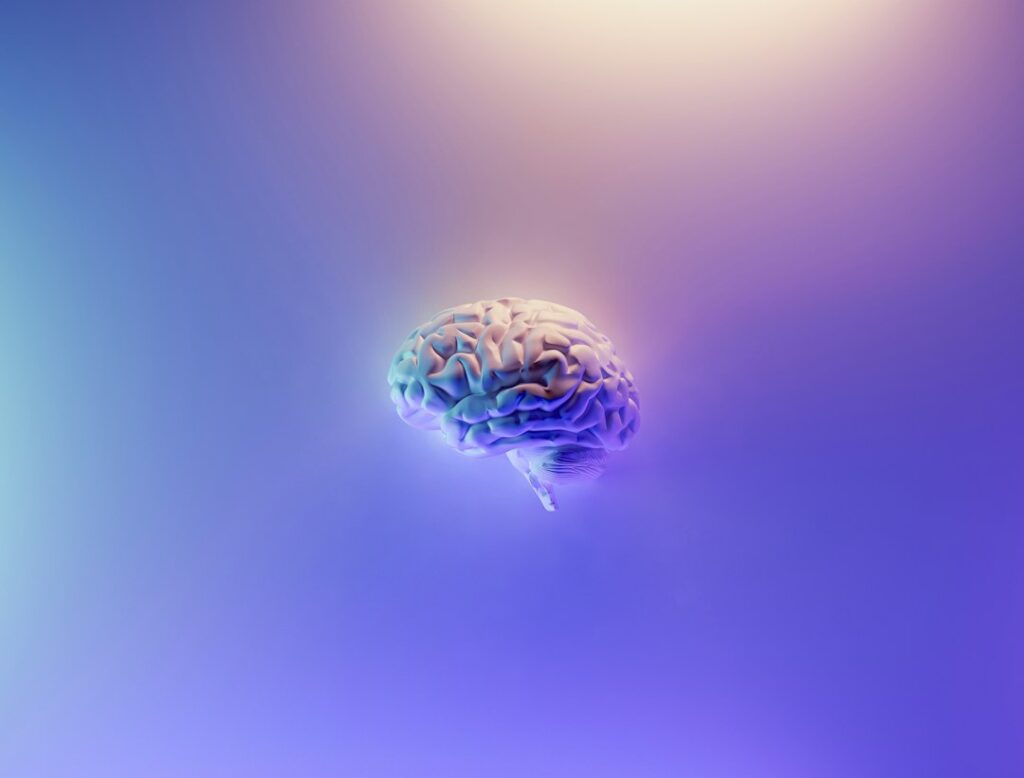
Key Takeaways
- The brain has two hemispheres, and some functions show a tendency to be more strongly lateralized to one side.
- In most adults, language processing relies more heavily on left-hemisphere networks, while some visuospatial and attention processes often involve right-hemisphere networks.
- These specializations do not mean that people have fixed “left-brained” or “right-brained” personalities.
- Complex activities such as creativity, reasoning, memory and decision-making depend on networks that interact across the brain.
- Brain lateralization varies among people and tasks. It does not determine a person’s career, intelligence or potential.
Introduction: Are You Really Left-Brained or Right-Brained?
You may have heard someone say, “I’m left-brained, so I’m good at logic,” or “I’m right-brained, so I’m creative.” These labels appear in personality quizzes, career advice and popular discussions of learning. They can sound convincing because they turn complex individual differences into an easy explanation.
Neuroscience supports a more precise conclusion. The brain’s two hemispheres are not identical in every function: some processes tend to be more strongly lateralized to one side. But this does not support the popular idea that each person belongs to a fixed left-brained or right-brained personality type.
Researchers study brain lateralization by examining how certain functions are distributed across the hemispheres. They also study how brain regions communicate within and across networks. The evidence suggests that some functions have typical lateralization patterns, while complex everyday activities usually involve several interacting systems.
This distinction matters. Believing that you are naturally “not creative” because you are supposedly left-brained, or “not analytical” because you are right-brained, can make a misleading story sound like a limit on your ability. Understanding lateralization helps replace those labels with a more useful view of the brain.
What Does Left-Brain vs Right-Brain Actually Mean?
The cerebrum has two main hemispheres, commonly called the left and right hemispheres. They are connected by bundles of nerve fibres, including the corpus callosum, which allow information to be shared across the brain. Each hemisphere contains many specialized regions and networks; neither is a single unit responsible for one broad kind of thinking.
Brain lateralization means that a function, process or pattern of activity is more strongly associated with one hemisphere than the other. Lateralization is a matter of degree and depends on what is being measured. It does not mean that only one side participates.
For example, language production and comprehension are left-lateralized in most adults, while aspects of visuospatial processing and attention often involve important right-hemisphere networks. The exact pattern varies by function, task and person. These differences tell us something about how the brain is organized—not whether someone has a logical or creative personality.
How Did the Left-Brain / Right-Brain Myth Develop?
Research into brain asymmetry and split-brain patients revealed genuine differences between the hemispheres. In rare cases, people with severe epilepsy underwent surgery that cut some of the major connections between the hemispheres to reduce the spread of seizures. These patients allowed scientists to study how each hemisphere processes information when communication is limited.
Such research helped neuroscience understand lateralization. But findings from specific tasks and rare clinical cases were sometimes extended into much broader claims about personality, learning styles, jobs and talents. The popular version became that logical people are dominated by the left hemisphere while artistic or intuitive people are dominated by the right.
Those categories go beyond what the evidence establishes. A hemisphere can be more involved in a particular function without determining an individual’s overall personality or skill profile. In a 2013 functional-connectivity study, Nielsen and colleagues did not find evidence for a whole-brain pattern in which people could be classified as generally left-brain dominant or generally right-brain dominant.
What the Left Hemisphere Tends to Contribute
For most adults, language tasks recruit left-hemisphere networks more strongly than their right-hemisphere counterparts. This can include important parts of speech production, word retrieval and language comprehension. The pattern is typical rather than universal, and different language processes can involve both hemispheres.
Some aspects of sequential processing, fine-grained sound analysis and learned motor actions may also show left-hemisphere biases, depending on the task. It would be misleading, however, to translate these findings into “the left hemisphere controls logic” or “the left hemisphere is the mathematical side.” Logical reasoning and mathematical problem-solving rely on multiple cognitive processes, including attention, memory, knowledge and the representation of the specific problem.
Nor does left-hemisphere specialization mean that the right hemisphere is uninvolved. The hemispheres communicate and cooperate, and even functions with a strong lateralization pattern may involve a wider network.
What the Right Hemisphere Tends to Contribute
The right hemisphere plays important roles in several visuospatial and attentional processes, although the exact division of labour depends on the task. It can also contribute to aspects of recognizing faces, interpreting context and understanding prosody—the rhythm, emphasis and intonation that help convey meaning in speech.
These contributions do not make the right hemisphere a general “creative side.” Creativity may involve generating ideas, retrieving relevant memories, evaluating alternatives, maintaining attention and refining a concept. These operations draw on several networks rather than a single hemisphere working alone.
Likewise, a person who enjoys art, music or design is not thereby shown to be right-brain dominant. Interests and skills are shaped by practice, experience, knowledge, motivation and opportunity as well as by the brain systems engaged during particular tasks.
Why Creativity and Analytical Thinking Use Distributed Networks
Creative thinking is not one isolated mental function. It can involve producing possibilities, drawing connections, recalling information, changing perspective and evaluating whether an idea fits a goal. These processes draw on networks distributed across the brain.
A review by Beaty and colleagues describes creative cognition as involving dynamic interactions among large-scale brain networks, including systems associated with internally generated thought and executive control. This is a more useful explanation than dividing creativity and logic into separate sides of the brain. A person may generate an unusual idea and then use careful analysis to assess and improve it.
Analytical reasoning also uses multiple systems. Depending on the problem, people may need to remember instructions, maintain intermediate steps, compare evidence, inhibit an unhelpful response and test a conclusion. These are not all performed by one isolated “logical hemisphere.”
Researchers may find lateralization during particular tasks, and studies of creativity do not all report identical patterns. The responsible conclusion is not that both hemispheres are equally active in every task, but that broad personality labels cannot be inferred from these more specific findings.
What Brain-Imaging Research Says About “Dominance”
Brain-imaging studies can measure activity or connectivity during rest and while people perform tasks. Different methods answer different questions, and the results depend on the task, the regions measured and how lateralization is calculated.
Nielsen and colleagues examined resting-state functional connectivity and tested the popular claim that people possess a general left-brain or right-brain dominance. Their results supported lateralized networks but did not provide evidence for a single person-level pattern of overall left- or right-brain dominance.
A separate review by Corballis explains how real asymmetries in brain function can become exaggerated into cultural myths. A more recent systematic review of language and visuospatial lateralization and cognitive ability found little evidence that the typical versus atypical patterns reviewed provided a straightforward, general cognitive advantage; the authors also noted that further research is needed.
These findings do not mean that hemispheric specialization is imaginary. They mean it should be described at the right level: specific functions may be lateralized, but this is different from claiming that each person has a dominant hemisphere that explains their thinking style.
Common Left-Brain / Right-Brain Myths
Myth 1: Logical people are left-brained
What the evidence supports: Some language and other functions show left-hemisphere specialization. Logic is a broad set of abilities and cannot be reduced to a single hemisphere or a personality category.
Myth 2: Creative people are right-brained
What the evidence supports: Creative thought involves interactions among several brain networks. Particular tasks may show lateralized patterns, but that does not establish a fixed right-brained creative personality.
Myth 3: One side of the brain is stronger in every person
What the evidence supports: Some functions show lateralization, but a global left-brained/right-brained classification is not supported by the functional-connectivity study described above. A person’s lateralization can vary by function and task.
Myth 4: Brain-side labels should determine career choices
What the evidence supports: No hemisphere label can reliably tell someone which career is suitable. Interests, training, opportunities, values, practice and the demands of the actual work are more useful factors to consider.
Myth 5: You cannot improve a skill if it is not your natural “side”
What the evidence supports: Skills can be developed through learning and practice. A simplified hemisphere label is not a sound reason to conclude that you cannot become better at writing, mathematics, design, music or problem-solving.
Does Handedness Determine Which Brain Side You Use?
Handedness and brain lateralization are related in some respects, but handedness does not by itself determine a person’s overall thinking style. For most right-handed adults, language is strongly left-lateralized; language is also left-lateralized in many left-handed people, though variation is greater.
Researchers distinguish between handedness, the lateralization of a specific function and the broader question of whether a person can be labelled as left-brained or right-brained. These are not interchangeable concepts. If a clinician needs to assess language lateralization for a medical reason, that requires appropriate evaluation rather than a popular personality quiz.
How to Apply This Knowledge in Everyday Life
Stop treating labels as limits
If you think you are “not creative” or “not logical,” identify the actual skill you want to build. Break it down into practiceable tasks—such as sketching regularly, testing a hypothesis, explaining your reasoning or solving problems with feedback. A label does not tell you what you could learn with practice.
Develop skills rather than a brain type
Use clear goals, regular practice and feedback. If you want to improve writing, write and revise. If you want to improve analytical thinking, compare evidence and explain why a conclusion follows. If you want to strengthen creative work, generate alternatives and test them against the problem. These are skill-building approaches, not treatments for a presumed dominant hemisphere.
Use evidence, not personality quizzes, for important decisions
Online quizzes may be entertaining, but they should not determine a medical decision, educational plan or career choice. For significant decisions, use relevant information, direct experience and advice from appropriately qualified people.
Stay curious about how the brain works
Brain science is complex and still developing. When a headline claims that one side controls a broad trait, look for the study behind it: what was measured, which people were studied, and whether the finding concerns one task or a general characteristic.
Frequently Asked Questions
Is the left-brain versus right-brain theory true?
Brain lateralization is real: some functions tend to be more strongly associated with one hemisphere. The popular claim that people have fixed left-brained or right-brained personalities is not supported by the research reviewed here.
Which side of the brain controls creativity?
No single hemisphere controls creativity. Research describes creative cognition as involving dynamic interactions among brain networks. Specific tasks can show different activation patterns, so broad claims should be avoided.
Which side of the brain controls language?
In most adults, language relies more heavily on left-hemisphere networks, though lateralization varies. Some aspects of communication, including emotional tone and context, can involve the right hemisphere and networks across the brain.
Are left-handed people right-brained?
Not as a general rule. Handedness is not a reliable way to assign a person a broad brain-side personality. Language lateralization patterns vary across individuals, including among left-handed people.
Can I improve both creative and analytical skills?
Skills can be developed through practice, feedback, instruction and experience. There is no need to identify with a brain-side label before learning a new skill.
Conclusion: Brain Specialization Is Real; Brain-Side Personalities Are Not
The left and right hemispheres have meaningful specializations, and studying them has helped researchers understand language, attention, spatial processing and other functions. But genuine lateralization does not support the idea that some people are logical by nature because they are left-brained, while others are artistic because they are right-brained.
Complex activities depend on interacting processes and networks, and individual ability develops through a combination of brain organization, knowledge, practice and experience. Rather than asking which side of your brain defines you, ask which skills you want to build and what evidence-based practice can help you build them.
For related reading, explore Psychology & Human Behaviour, What Is Personality? and Cognitive Biases. JM MindMint provides general educational information and does not replace individualized medical or professional advice.
References
- Nielsen, J. A., Zielinski, B. A., Ferguson, M. A., Lainhart, J. E., & Anderson, J. S. (2013). An evaluation of the left-brain vs. right-brain hypothesis with resting state functional connectivity magnetic resonance imaging. PLOS ONE, 8(8), e71275. https://doi.org/10.1371/journal.pone.0071275
- Corballis, M. C. (2014). Left brain, right brain: Facts and fantasies. PLOS Biology, 12(1), e1001767. https://doi.org/10.1371/journal.pbio.1001767
- Beaty, R. E., Benedek, M., Silvia, P. J., & Schacter, D. L. (2016). Creative cognition and brain network dynamics. Trends in Cognitive Sciences, 20(2), 87–95. https://doi.org/10.1016/j.tics.2015.10.004
- Quin-Conroy, J. E., Bayliss, D. M., Daniell, S. G., & Badcock, N. A. (2024). Patterns of language and visuospatial functional lateralization and cognitive ability: A systematic review. Laterality, 29(1), 63–96. https://doi.org/10.1080/1357650X.2023.2263199
Support JM MindMint
Your support helps us create accessible content about psychology, human behaviour, digital wellbeing and AI ethics. Every contribution is appreciated.
UPI ID: jagadishmokashi@ybl