By Jagadish Mokashi | JM MindMint
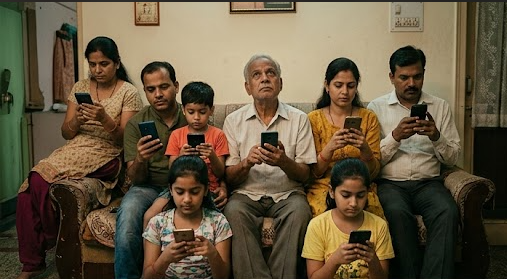
Imagine a family sitting together at home. Everyone is physically present, but each person is looking at a different screen. A parent is answering work messages, a child is watching videos, and an older relative is waiting for someone to start a conversation.
This scene is familiar in many households. It raises a question that is bigger than screen time: what helps people feel that they belong?
Family life is changing as people move for education and work, households become smaller or take different forms, and digital communication becomes part of everyday relationships. These changes can create new opportunities, but they can also make connection more difficult when time, attention, or support is limited.
Psychology does not tell us that one family structure is always better than another. A joint family can provide shared care and companionship, but it can also involve conflict or limited privacy. A nuclear family can offer autonomy and flexibility, but may place more responsibility on fewer people. What matters is the quality of relationships, the availability of support, and whether people feel respected and included.
What Does Belonging Mean in Family Psychology?
Belonging is the experience of being accepted, valued, and connected to other people. Within families, it can grow through reliable care, listening, shared routines, affection, practical help, and the feeling that each person’s needs matter.
Belonging does not require a perfect family or constant agreement. Healthy families can disagree. The important difference is whether people can discuss problems without humiliation, intimidation, or repeated disregard for one another.
Family relationships can provide emotional support during illness, financial stress, grief, parenting challenges, and major life transitions. They can also help children learn communication, cooperation, empathy, and boundaries through everyday interactions.
For more on how relationships and behaviour influence one another, see our introduction to cyberpsychology and our guide to active listening.
Joint Families and Nuclear Families: More Than a Simple Comparison
In India, family arrangements include joint, nuclear, extended, single-parent, single-person, and other household forms. These arrangements are shaped by employment, education, housing costs, migration, caregiving needs, personal preferences, and cultural expectations.
A joint or multigenerational household may make it easier to share childcare, elder care, household responsibilities, and everyday companionship. Children may have regular contact with grandparents and other relatives. Adults may have more people to turn to during a difficult period.
However, living with more relatives does not automatically guarantee emotional support. Differences in expectations, privacy, finances, household responsibilities, parenting decisions, or personal boundaries can create stress. Some family members may feel supported, while others may feel unheard or overburdened.
A nuclear household can offer greater privacy, independence, and flexibility in daily decisions. It may allow parents and children to develop routines that suit their circumstances. At the same time, fewer adults in the home can mean that childcare, elder care, and financial responsibilities fall on a smaller number of people. Support from friends, neighbours, relatives, and community services may become especially important.
The useful question is not “Which family type is best?” It is “Does this household provide safety, respect, reliable care, and enough support for the people who live in it?”
What Research Says About Family Structure in India
Family structure in India has changed over time, but the pattern is not a simple nationwide shift from joint families to nuclear families. A study using five rounds of National Family Health Survey data from 1992–93 to 2019–21 found that different household forms changed in different ways and that family structure was associated with factors such as education, wealth, land ownership, region, and place of residence. Read the research on family-structure trends in India.
Research also cautions against assuming that one household type automatically produces better emotional well-being. A 2024 study of 136 young adults in India found no statistically significant difference in loneliness or life satisfaction between participants from nuclear and joint families. The study was relatively small, so its results should not be treated as a final answer for every age group or region. Read the study.
A separate mixed-methods study of 470 Indian emerging adults aged 18–25 examined family structure alongside experiences such as loneliness, self-efficacy, conformity, and affiliation. It highlights the value of studying family experiences in context rather than assuming that household type alone explains an individual’s psychological life. Read the study details.
Together, these studies support a careful conclusion: family structure matters, but it is only one part of a much wider picture. Relationship quality, conflict, practical support, autonomy, economic circumstances, and the wider community also influence well-being.
When Work, Migration, and Urban Life Change Family Routines
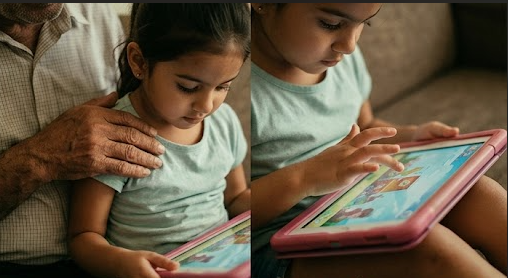
Education and employment can take people away from their hometowns. Some families live across different cities or countries. Others share a home but have very different schedules because of shift work, long commutes, study, or caregiving responsibilities.
These arrangements can create practical benefits, such as income, independence, and access to education. They can also make everyday support harder to organize. A parent may have little time after work; an older adult may spend long periods alone; a young person may hesitate to discuss a problem if everyone seems busy.
It is not helpful to romanticize the past or assume that earlier family arrangements were free of conflict. Nor is it accurate to assume that modern families are less caring. Each generation faces different pressures and resources.
What families can protect is the quality of their contact. A short, attentive conversation can be more meaningful than spending an evening in the same room without listening to one another.
How Digital Technology Can Connect—and Divide—Families

Digital tools can help relatives stay connected across distance. Video calls allow grandparents to see grandchildren, messaging groups help families coordinate care, and online services can make education, health information, and government support easier to access.
Technology can also interrupt face-to-face attention. Notifications during meals, constant work messages, or long periods of scrolling may reduce opportunities for conversation. This does not mean every screen use is harmful. The purpose, timing, content, and effect on daily life matter.
It is also important to avoid simple claims that social media use automatically damages the brain or reduces dopamine receptors. A systematic review of 28 neuroimaging studies found some associations between problematic social-networking use and brain activity or structure, but the researchers noted substantial differences between studies and a lack of longitudinal evidence to establish cause and effect. Read the systematic review.
For a practical look at digital habits and social comparison, read our article on social-media scrolling and Why Social Media Can Leave You Feeling Empty.
Understanding the Digital Divide

The digital divide is not only about whether a household owns a smartphone. It also includes the quality and affordability of internet access, device availability, digital skills, language, accessibility, privacy, and confidence using online services.
For example, a student may have a phone but no quiet place to study online. An older adult may have internet access but need help recognizing scams or navigating a health portal. A person with a disability may find that a website or app is difficult to use. A family sharing one device may have to negotiate who can use it and when.
These differences can affect participation in education, employment, healthcare, public services, and social life. Digital inclusion therefore involves more than distributing devices. People also need affordable connectivity, accessible design, relevant language support, and opportunities to develop practical digital skills.
Within families, digital skills can be shared across generations. Younger relatives may help older family members use video calls or online services, while older relatives can share experience, cultural knowledge, and practical guidance. Mutual learning is more respectful than treating one generation as automatically capable and another as incapable.
Why Emotional Connection Matters More Than Household Size
A household can be large and still feel lonely. A person can live alone and still have strong, reliable relationships. The number of people under one roof does not tell us whether someone feels listened to, respected, or supported.
Emotional connection is strengthened by everyday behaviours:
- Listening without immediately judging. Let people explain what they are experiencing before offering advice.
- Sharing responsibilities fairly. Care work, household tasks, and emotional support should not fall automatically on one person.
- Respecting privacy and boundaries. Closeness does not mean that everyone must agree or share every detail.
- Keeping regular contact. Short calls, shared meals, walks, or family routines can help people stay connected.
- Making room for different generations. Ask children, adults, and older relatives what kind of support is useful to them.
- Addressing conflict safely. Disagreement is normal; intimidation, coercion, and abuse are not acceptable.
For parents, emotional connection is not about being available every minute. It is about creating predictable moments when children can speak and expect to be taken seriously. Our article Discipline the Behaviour, Not the Emotion explores how adults can respond to children’s feelings while maintaining appropriate boundaries.
Practical Ways to Build Belonging in a Digital Home
Families do not need to reject technology or recreate an earlier way of life. Small, realistic habits can help protect attention and strengthen relationships.
- Create a few device-free moments. Consider meals, bedtime routines, or a short daily conversation. Make the rule mutual rather than targeting only children.
- Agree on shared expectations. Discuss when work messages, games, videos, and social media can interrupt family time.
- Use technology to include people. Schedule calls with relatives who live far away, share photographs, or help older family members access useful services.
- Protect one-to-one conversations. Check in with each family member privately instead of assuming that everyone will speak in a group.
- Share caregiving and household work. Discuss responsibilities openly and review the arrangement when work or health circumstances change.
- Build connections beyond the household. Friendships, neighbours, schools, community groups, and local services can provide support that no single family can supply alone.
- Ask for help when needed. Persistent loneliness, conflict, distress, or caregiving strain may be easier to address with a counsellor, healthcare professional, or appropriate community service.
Key Takeaways
- No single family structure guarantees happiness, belonging, or good mental health.
- Joint and nuclear families can both provide support and both face challenges.
- Research in India shows that family arrangements are diverse and changing; well-being depends on more than household type.
- Digital tools can connect relatives, but unequal access and constant interruptions can create barriers.
- Listening, fair responsibilities, boundaries, shared routines, and community support help build belonging.
Conclusion: Belonging Is Built Through Relationships
The architecture of belonging is not defined by the number of people in a home or by whether a family is joint or nuclear. It is built through care, respect, communication, shared responsibility, and the freedom to be heard.
Technology and changing work patterns will continue to reshape family life. The goal should not be to blame modern life or idealize the past. It should be to make thoughtful choices that help people remain connected while respecting privacy, independence, and different needs.
A family becomes a source of support when its members can rely on one another without losing their individuality. Digital tools can help maintain those connections, but they cannot replace every part of human care. Belonging grows when people make time to listen, include one another, and respond with respect.
References and Further Reading
- Mondal, S., & Pradhan, M. R. (2025). Trends, Patterns and Determinants of Family Structure in India: A Perspective of Three Decades. Marriage & Family Review, 61(2), 185–225.
- Singh, S., & Sirvastva, N. (2024). Loneliness and Satisfaction with Life among Young Adults Belonging to Nuclear and Joint Families. International Journal of Indian Psychology, 12(2), 1542–1552.
- Baruah, A., Jain, Y., Richharia, S., Nawaz, I., & Dhamija, B. (2025, online first). The role of family structure in shaping psychological experiences of emerging adults: A mixed methods study. International Journal of Social Psychiatry.
- Systematic review. (2023). A systematic review of structural and functional MRI studies investigating social networking site use.
JM MindMint publishes educational psychology content. This article is for general information and is not a substitute for individualized mental-health, family, or legal advice.
About the Author: Jagadish Mokashi is the founder of JM MindMint, a platform exploring psychology, human behaviour, digital life, and AI ethics.