By Jagadish Mokashi | JM MindMint
People sometimes describe feeling calm, alert, sleepy, or mentally busy as being in a particular “brain-wave state.” These descriptions are popular in wellness content, meditation apps, and online videos. But what do brain waves actually mean?
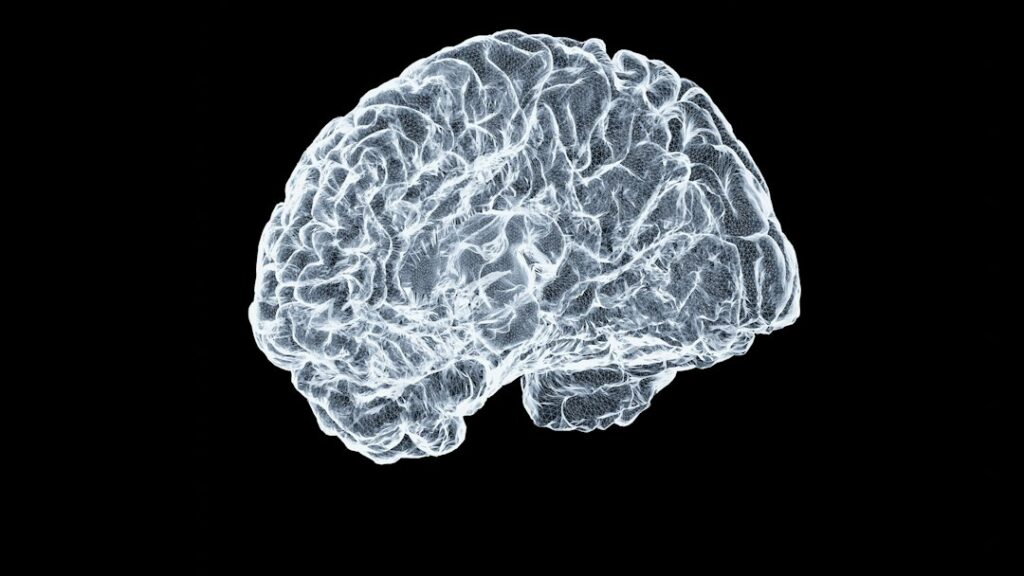
Brain waves are patterns of electrical activity recorded from the scalp using electroencephalography, or EEG. They provide useful information about brain activity, especially in the evaluation of seizures, sleep, and certain neurological conditions. They are not a direct reading of thoughts, personality, intelligence, or emotional health.
Understanding the science requires a distinction between measurable EEG rhythms and the simplified claims often made about them. Different frequency bands can be associated with certain brain states or tasks, but they do not operate as five separate switches that control the mind.
What Are Brain Waves?
Brain cells communicate through electrical and chemical processes. When groups of neurons produce coordinated electrical activity, some of that activity can be detected by electrodes placed on the scalp. An EEG machine records changes in electrical potential over time and displays them as wave-like patterns.
The recorded signal reflects the combined activity of large populations of neurons. It is influenced by where electrodes are placed, the person’s age and level of alertness, eye movements, muscle activity, medication, and the recording conditions. EEG is therefore interpreted by trained professionals in the context of the person’s symptoms and the reason for the test.
The U.S. National Institute of Neurological Disorders and Stroke explains that EEG is used to help diagnose seizure disorders and evaluate sleep disorders and other conditions that affect brain activity. It is not a general-purpose test for measuring intelligence or identifying someone’s personality. Read the NINDS overview.
Common EEG Frequency Bands
Researchers and clinicians often describe EEG activity using frequency bands. The ranges below are common approximations; exact boundaries can differ between research studies and clinical conventions. Frequency alone does not tell a clinician everything about a signal. Location, shape, timing, amplitude, symmetry, and the person’s state also matter.
- Delta (roughly 0.5–4 Hz): slow activity commonly associated with deep non-REM sleep. Delta activity can also appear in other contexts, including certain neurological conditions, so its meaning depends on the person and recording.
- Theta (roughly 4–8 Hz): activity seen in several contexts, including drowsiness, some stages of sleep, and aspects of memory and cognitive processing. It is not simply a “creativity frequency.”
- Alpha (roughly 8–13 Hz): a rhythm often prominent over the back of the head when a relaxed, awake person has their eyes closed. It commonly decreases when the eyes open or attention shifts to visual information.
- Beta (roughly 13–30 Hz): faster activity that can be present during alert wakefulness and active processing. It is not a direct measure of focus, anxiety, or overthinking.
- Gamma (often around 30–100 Hz): higher-frequency activity studied in relation to perception and information processing. Scalp recordings in this range can be affected by muscle activity and other sources of noise, so interpretation requires care.
The American Clinical Neurophysiology Society’s standardised EEG terminology provides formal guidance on describing background rhythms and other EEG patterns in clinical settings. Its terminology is more precise than the simplified labels often used in popular descriptions. Read the ACNS guideline.
Do Brain Waves Correspond to Specific Mental States?
There are associations between EEG rhythms and aspects of sleep, alertness, attention, and cognitive processing. However, it is misleading to say that one frequency always means one mental state. A person can show several frequency bands at the same time, and the pattern can vary across brain regions and across moments.
For example, alpha activity is often prominent when a person is awake with their eyes closed. When the eyes open, the posterior alpha rhythm commonly attenuates. This is a measurable change in EEG activity; it does not mean that the brain has switched from a “subconscious” state to a “conscious” one.
Likewise, beta activity can occur during alert wakefulness, but a higher beta reading does not automatically mean a person is anxious or thinking too much. Theta activity is involved in multiple processes and can appear in different contexts. Delta activity is prominent in deep sleep, but its presence in an awake adult must be interpreted in relation to the full EEG and clinical situation.
A 2019 review of resting-state EEG frequency bands in psychiatric research highlighted substantial variation in definitions and methods across studies. This makes it important to avoid turning one frequency measurement into a simple conclusion about a person’s mental health. Read the review.
Brain Waves and Sleep
EEG is especially useful in sleep research because electrical patterns change as a person moves through different sleep stages. Slow-wave activity is prominent during deep non-REM sleep, while other patterns—including sleep spindles and K-complexes—help specialists identify particular stages and events.
Sleep is not controlled by one frequency band. It involves coordinated changes in brain activity, body temperature, hormones, breathing, and other physiological systems. A single consumer device or app cannot reliably tell the whole story of a person’s sleep health from a simplified “brain-wave score.”
Can Meditation or Relaxation Change EEG Activity?
Some studies have reported changes in EEG activity during meditation, relaxation, or focused-attention exercises. The findings vary according to the type of practice, the participant’s experience, the recording method, and the way the data are analysed.
It is reasonable to say that mental activities can be accompanied by measurable changes in brain activity. It is not accurate to promise that meditation will always increase alpha or theta waves, that a specific frequency guarantees calmness, or that people can permanently improve mental performance by trying to control a particular rhythm.
Meditation may be useful for some people as one part of a broader well-being routine, but it should not be presented as a treatment for every condition or as a way to diagnose or correct an EEG pattern without medical guidance.
What Brain Waves Can—and Cannot—Tell Us
EEG can help clinicians:
- Investigate suspected seizures and epilepsy.
- Assess certain sleep-related conditions.
- Monitor brain activity in some critical-care situations.
- Identify patterns that may support the evaluation of encephalopathy or altered consciousness.
- Study how brain activity changes during tasks, sleep, or other controlled conditions.
EEG cannot, by itself:
- Read a person’s thoughts or reveal whether someone is telling the truth.
- Measure a person’s intelligence or full learning potential.
- Provide a complete diagnosis of depression, anxiety, or personality.
- Prove that a person is creative, focused, spiritually advanced, or emotionally balanced.
- Show that a particular consumer “brain-wave training” programme will improve general intelligence.
Even a normal EEG does not rule out every neurological condition. Test results must be interpreted alongside a person’s history, symptoms, examination, and other relevant information.
Be Careful with Brain-Wave Training Claims
Products may promise to synchronise the brain, increase intelligence, eliminate stress, or produce a desired mental state through sound, light, or wearable devices. Some technologies are being studied for specific purposes, but marketing claims often go beyond what the evidence can support.
Before relying on a brain-wave product, ask what outcome was measured, whether the study involved an appropriate comparison group, how many people took part, whether the results were independently replicated, and whether the product has been evaluated for the purpose being advertised. A change in an EEG measurement does not automatically mean a meaningful improvement in memory, mood, sleep, or daily functioning.
If you have symptoms such as unexplained blackouts, suspected seizures, unusual episodes of lost awareness, or persistent sleep problems, speak with a qualified healthcare professional rather than trying to interpret a consumer EEG reading yourself.
Conclusion: Brain Rhythms Are Useful Signals, Not a Mind-Control Switch
Brain waves are an important part of neuroscience. EEG allows researchers and clinicians to observe patterns of electrical activity with excellent time resolution and to investigate conditions such as epilepsy and sleep disorders.
The science is more interesting than the popular myths. Alpha, beta, theta, delta, and gamma are descriptive frequency bands, not separate controls for relaxation, intelligence, creativity, or happiness. Their meaning depends on context, location, timing, and the full pattern of activity.
Rather than trying to “master” a particular brain wave, focus on habits that support general health and learning: adequate sleep, regular physical activity, meaningful practice, and seeking professional advice when symptoms need assessment.
For related reading on learning and cognition, explore Is Intelligence a Skill or a Talent? and AI and the Brain: What Research Says About Thinking and Learning.
References and Further Reading
- Hirsch, L. J., Fong, M. W. K., Leitinger, M., et al. (2021). American Clinical Neurophysiology Society’s Standardized Critical Care EEG Terminology: 2021 Version. Journal of Clinical Neurophysiology, 38(1), 1–29.
- StatPearls. Normal EEG Waveforms. NCBI Bookshelf.
- Newson, J. J., & Thiagarajan, T. C. (2019). EEG Frequency Bands in Psychiatric Disorders: A Review of Resting State Studies. Frontiers in Human Neuroscience, 12, 521.
- National Institute of Neurological Disorders and Stroke. Neurological Diagnostic Tests and Procedures: Electroencephalography.
- MedlinePlus. EEG: Electroencephalogram.
This article is for general education. It does not diagnose neurological or mental-health conditions and is not a substitute for medical advice.
About the Author: Jagadish Mokashi is the founder of JM MindMint, where he writes about psychology, human behaviour, digital life, and AI ethics.