Emotions can seem to arrive without warning: a racing heart before a presentation, a surge of excitement after good news, or tiredness after prolonged stress. These experiences are shaped by more than thoughts alone. The brain, nervous system, hormones, body signals, past experiences and surrounding situation work together.
This article explains the science without reducing feelings to a simple chemical formula. Hormones and neurotransmitters influence emotional experience, but no single substance controls happiness, love, anger or sadness.
What are hormones?
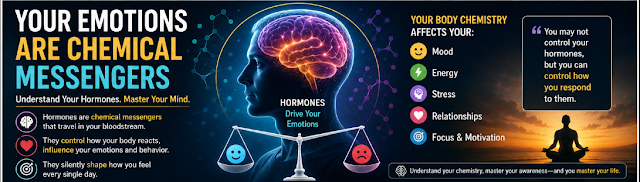
Hormones are chemical messengers released by endocrine glands and certain tissues. They travel through the bloodstream and act on cells that have the right receptors. They help coordinate processes such as metabolism, growth, reproduction, sleep timing and the body’s response to stress.
The hypothalamus and pituitary gland help coordinate several endocrine systems. The hypothalamus links brain activity with hormone regulation, while the pituitary sends signals that influence other glands. The Endocrine Society describes this relationship as a central coordinating system for endocrine function.
Hormones are not the only chemical messengers involved in emotion. Neurotransmitters are signalling chemicals released by nerve cells, usually acting across synapses. The categories can overlap: some substances have both hormonal and neurotransmitter or neuromodulator roles depending on where and how they act.
Hormones and neurotransmitters: an important difference
Popular articles sometimes call dopamine and serotonin “happiness hormones.” That phrase is catchy, but scientifically imprecise. Dopamine and serotonin are best known as neurotransmitters in the brain, although their functions are broader and context-dependent. They help regulate networks involved in learning, motivation, movement, attention, sleep, appetite and mood.
Hormones usually communicate through the bloodstream and can influence many organs. Neurotransmitters usually carry signals between nerve cells. Both systems interact with each other and with the body’s immune, metabolic and autonomic systems.
Key chemical messengers involved in emotional experience
1. Dopamine: learning, motivation and reward
Dopamine is a neurotransmitter involved in movement, learning, motivation and the brain’s ability to update behaviour based on rewards and expectations. It is not simply a “pleasure chemical.” Dopamine activity can help the brain notice what is important, learn from outcomes and energise goal-directed behaviour.
Notifications, games, social feedback and other rewarding experiences can engage learning and reward systems. But it is misleading to say that every notification causes a predictable dopamine “spike” or that dopamine alone creates addiction. Repeated behaviour is shaped by learning, cues, availability, emotion, habits and social context, alongside brain biology.
2. Serotonin: a broad signalling system
Serotonin is a neurotransmitter with roles in mood-related processes, sleep, appetite, digestion and other functions. It is involved in many brain circuits, and its effects depend on the receptor, brain region and wider biological context.
Depression should not be explained as simply “low serotonin.” Research has challenged the idea that depression can be reduced to a single chemical deficiency. A University College London summary of a major 2022 review notes that the evidence does not support a simple serotonin-imbalance explanation. This does not mean serotonin is irrelevant or that prescribed antidepressants cannot help; it means depression is complex and cannot be diagnosed from a presumed neurotransmitter level.
3. Cortisol: adapting to stress
Cortisol is a steroid hormone produced by the adrenal glands. It is part of the hypothalamic–pituitary–adrenal (HPA) axis, a system that helps the body respond to challenges. Cortisol follows a daily rhythm and supports functions such as energy regulation, blood pressure and the stress response.
A short-term rise can be adaptive: it helps mobilise energy when a person faces a demanding situation. Long-lasting stress, however, can affect sleep, concentration, mood and physical health. The relationship is not as simple as “high cortisol equals anxiety”; cortisol varies with time of day, health, medication, sleep and the nature of the stressor.

4. Adrenaline: rapid preparation for action
Adrenaline (epinephrine) is released by the adrenal glands during acute stress and other high-arousal situations. It can increase heart rate, redirect blood flow and make stored energy more available. These changes help prepare the body for action.
A pounding heart or trembling hands can therefore occur during fear, excitement or anticipation. The physical sensations are real, but their meaning depends on the situation and the person’s interpretation. Adrenaline is one part of the response, not a complete explanation of an emotion.
5. Oxytocin: bonding and social behaviour
Oxytocin is a hormone produced in the hypothalamus and released into the bloodstream by the pituitary gland. It has well-established roles in childbirth and milk let-down. Oxytocin signalling in the brain is also studied for its involvement in social recognition, attachment and aspects of social behaviour.
Calling it the “love hormone” can create the wrong impression. Its effects are not uniformly positive, and they depend on the person, relationship and social setting. Oxytocin does not automatically create trust, kindness or romantic love.
6. Endorphins: pain modulation
Endorphins are naturally produced opioid peptides that help regulate pain and stress responses. They act on opioid receptors and can contribute to pain relief and changes in well-being. Exercise and other experiences may engage these systems, but there is no single guaranteed activity that produces the same emotional effect in everyone.
How body chemistry and emotions influence each other
The relationship works in both directions. A threatening situation can activate the nervous system and stress-hormone pathways. At the same time, thoughts, memories, expectations and social support can change how a person experiences that situation. Sleep loss, illness, medication, thyroid conditions and reproductive-hormone changes may also influence mood or energy in some people.
Imagine receiving an unexpected message before an important meeting. Your brain interprets the message in context; the autonomic nervous system may increase alertness; adrenaline-related changes may make your heart beat faster. If you interpret the sensation as readiness, you may feel energised. If you interpret it as danger, you may feel anxious. Biology and interpretation are interacting, not competing explanations.
What supports emotional and hormonal health?
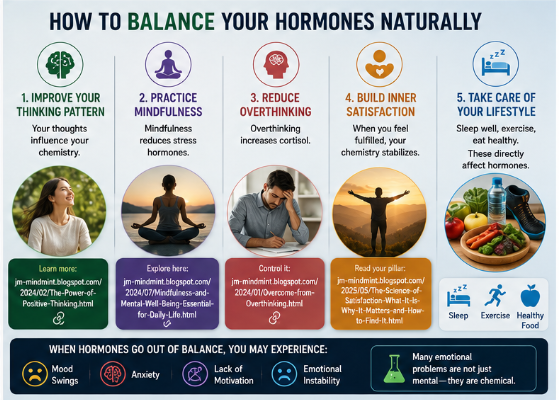
There is no universal “hormone-balancing” trick, and lifestyle habits should not be presented as a substitute for medical care. Still, several foundations support general health and can make emotional regulation easier:
- Protect sleep: keep a reasonably consistent sleep and wake schedule and address persistent sleep problems.
- Move regularly: choose activity that is realistic and sustainable, such as walking, cycling, dancing or strength exercises.
- Eat consistently: aim for varied meals and adequate nourishment rather than extreme diets or unverified hormone-balancing supplements.
- Use practical stress skills: paced breathing, mindfulness, time outdoors, problem-solving and supportive conversations may help manage stress.
- Strengthen social connection: trusted relationships can provide practical and emotional support, even though no single hormone explains connection.
- Review persistent symptoms: ongoing fatigue, major mood changes, sleep disruption or other concerning symptoms deserve an assessment by a qualified healthcare professional.
For more on practical coping skills, see evidence-informed strategies for emotional balance and the guide to mental wellness and common psychological difficulties.
When should you seek professional advice?
Do not assume that anxiety, low mood or irritability proves that a hormone is “out of balance.” Many physical and psychological conditions can produce overlapping symptoms. A clinician can consider the full history, examination, medicines and whether any tests are appropriate. Hormone tests are not a general-purpose measure of happiness or emotional stability.
If emotional symptoms are persistent, interfere with daily life or feel difficult to manage, speak with a healthcare professional. If you may harm yourself or someone else, seek urgent local emergency or crisis support.
A balanced perspective: chemistry matters, but it is not destiny
Hormones and neurotransmitters are part of the biology of emotion, but feelings emerge from complex interactions among the brain, body, learning, relationships and environment. There is no single chemical that determines whether a person is happy, confident, loving or anxious.
Understanding the biology can reduce self-blame and encourage informed care. It should not lead to self-diagnosis or the belief that every difficult feeling can be fixed by changing one chemical. Emotional well-being is supported by biological health, psychological skills, meaningful relationships and appropriate professional help when needed.
Frequently asked questions
Do hormones affect emotions?
Yes. Hormones influence body systems that interact with the brain and can affect energy, stress responses, sleep and aspects of mood. They are one part of a much larger system.
Is dopamine a hormone?
Dopamine is primarily discussed as a neurotransmitter in the brain. It can also act as a neurohormone in particular pathways, so calling it simply a “happiness hormone” is misleading.
Does low serotonin cause depression?
Depression cannot be reduced to a simple low-serotonin explanation. Serotonin is involved in brain signalling, but depression has multiple biological, psychological and social contributors.
Is oxytocin the love hormone?
That is an oversimplification. Oxytocin has important roles in childbirth and lactation and is studied for its context-dependent effects on social behaviour and bonding.
Can lifestyle habits balance hormones?
Sleep, activity, nutrition and stress management support general health, but they do not diagnose or treat every endocrine condition. Persistent symptoms should be discussed with a qualified clinician.
References and further reading
- Endocrine Society: Brain Hormones.
- University College London (2022): Analysis of the evidence on serotonin and depression.
- Farhud et al. (2014): Happiness & Health: The Biological Factors. This review is included as broad background, not as proof that one hormone causes happiness.
- Cleveland Clinic: Endorphins.
- Bottaccioli et al. (2025): Rethinking Depression—Beyond Neurotransmitters.
JM MindMint is an educational resource, not a substitute for diagnosis or treatment. This article is for general information and should not be used to change medication or start supplements without professional advice.