By Jagadish Mokashi | JM MindMint
Life can feel difficult when stress, worry, uncertainty, and emotional pressure build up at the same time. A work problem may affect sleep. A family disagreement may make it harder to concentrate. Financial pressure may leave a person feeling tense even during quiet moments.
People often describe the goal of coping with these experiences as “mental stability” or “emotional balance.” These are everyday expressions, not clinical diagnoses. They do not mean a person should feel calm all the time or never experience sadness, anger, anxiety, or stress. A healthier goal is to recognise emotions, respond in ways that protect well-being, recover after difficult experiences, and seek support when it is needed.
This guide explains practical, evidence-informed approaches to managing stress and emotions. They are skills to practise, not quick fixes or substitutes for professional care.
What Does Emotional Balance Mean?
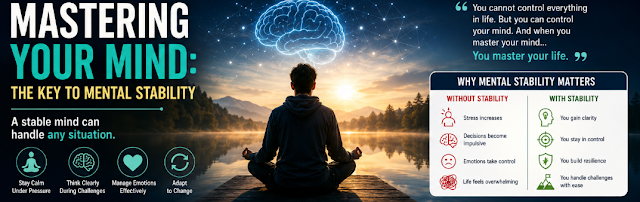
Emotional balance does not mean controlling every feeling. Emotions provide information about what matters to us, what we perceive as threatening, and how we are responding to events. The aim is to notice feelings, understand the situation, and choose a response rather than reacting automatically every time.
Psychologist James Gross’s influential process model describes several points at which people may regulate emotion: choosing or changing a situation, directing attention, reappraising what an event means, and influencing how a response is expressed. This framework helps explain why emotional regulation involves more than simply suppressing feelings. Read Gross’s review of emotion regulation.
A person can feel upset and still communicate respectfully. Someone can feel anxious and still take a useful next step. Emotional strength is not the absence of emotion; it includes the ability to respond flexibly.
A simple pause can make this easier. First, name the emotion as specifically as you can: “I feel worried,” “I feel disappointed,” or “I feel angry.” Next, notice what happened just before the feeling intensified. Finally, choose one response that fits your values and the situation. You may decide to ask a question, take a short break, set a boundary, or return to the issue later.
Understand Stress Without Treating It as an Enemy
Stress is a normal response to demands that seem challenging or threatening. In the short term, stress responses can help people pay attention and prepare to act. Problems can arise when demands remain high, recovery time is limited, or a person feels unable to influence what is happening.
Stress involves several interacting systems in the body and brain. Hormones such as cortisol are part of this response, but it is inaccurate to say that cortisol is always elevated whenever someone feels stressed or that the brain simply remains in “survival mode.” Stress responses vary with the person, the situation, timing, and health.
It may help to identify which parts of a stressful situation can be changed and which cannot. For example, a person may not be able to remove every work demand, but may be able to clarify priorities, ask for support, plan a difficult conversation, or take a short recovery break.
Recognise Overthinking and Unhelpful Thought Loops
Overthinking is not proof that someone is mentally unstable. Many people replay conversations, imagine possible outcomes, or worry about decisions, especially during uncertain periods. It becomes more concerning when repetitive thinking is persistent, difficult to interrupt, interferes with sleep or daily responsibilities, or increases distress without helping the person solve a problem.
One useful distinction is between problem-solving and rumination. Problem-solving identifies a specific issue and moves toward a possible action. Rumination often repeats the same questions without producing new information or a decision.
- Write down the concern in one sentence.
- Ask whether there is an action you can take now.
- If there is, choose one small and realistic step.
- If there is not, practise returning attention to the activity in front of you.
- Set aside a short, planned time to revisit the issue instead of trying to solve it all day.
These steps will not resolve every worry, but they can help some people move from repetitive thinking toward a more manageable response.
Use Grounding and Mindfulness Skills When Stress Rises
Grounding brings attention back to the present moment. It can be useful when thoughts are racing or when a person feels overwhelmed. A simple exercise is to notice the contact of your feet with the floor, name a few things you can see and hear, and take a comfortable breath without forcing it to become deep or slow.
Mindfulness involves paying attention to present experience with an attitude of openness. It is not about emptying the mind or preventing thoughts from appearing. Some people find mindfulness helpful; others may find stillness uncomfortable, particularly during periods of intense distress. If an exercise increases discomfort, stop and try a different grounding activity or seek guidance.
The World Health Organization’s guide Doing What Matters in Times of Stress offers practical skills including grounding, unhooking from unhelpful thoughts, making room for difficult feelings, acting on personal values, and being kind to oneself.

Practise Self-Compassion Instead of Constant Self-Criticism
People sometimes believe that being harsh with themselves will create discipline. But repeated self-criticism can add shame and stress without helping a person understand what needs to change. Self-compassion means responding to personal difficulty with honesty and care rather than pretending that nothing is wrong.
A 2019 meta-analysis by Ferrari and colleagues examined 27 randomised controlled trials of self-compassion interventions. The review found improvements in several psychosocial outcomes, although effects varied across studies and interventions. Self-compassion is not a promise that distress will disappear; it is one approach that may help people respond to setbacks in a less punishing way. Read the meta-analysis.
A practical example is changing “I always fail; I am useless” to “This did not go the way I hoped. What can I learn, and what is one step I can take next?” The second statement does not deny responsibility. It makes room for learning without attacking the whole person.
Build Resilience Through Small, Repeatable Actions
Resilience is not a permanent personality trait that some people have and others lack. It is a process influenced by personal skills, relationships, resources, health, and the circumstances a person faces. Recovery can look different for different people, and it does not always happen quickly.
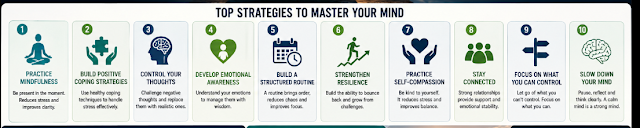
Rather than trying to change everything at once, choose a few routines that are realistic in your circumstances:
- Protect recovery time. Make room for rest between demanding tasks where possible.
- Keep a basic routine. Regular meals, sleep opportunities, movement, and manageable daily plans can support well-being.
- Break large problems into steps. A small action can make a difficult situation feel more manageable.
- Stay connected. Talk with someone you trust instead of carrying every concern alone. Good listening can strengthen these conversations; see How to Be a Better Listener.
- Set boundaries. Where possible, clarify what you can take on and what needs to wait.
- Notice progress. Record small actions you completed, not only the problems that remain.
Resilience does not mean tolerating unsafe conditions or pretending that serious problems are easy. Sometimes the most helpful step is asking for practical assistance, changing an environment, or getting professional support.
When Professional Support Can Help
Self-help strategies can be useful for everyday stress, but they are not enough for every situation. Consider speaking with a qualified mental-health professional if distress is persistent, getting worse, affecting work or relationships, disrupting sleep, or making ordinary activities difficult.
Cognitive behavioural therapy (CBT) is one evidence-based approach used for several mental-health concerns. A review by Hofmann and colleagues examined meta-analyses of CBT across conditions and found strong support for its use in areas including anxiety disorders and general stress, while also noting that evidence and outcomes differ by condition and population. Read the review.
If you feel at immediate risk of harming yourself or someone else, seek urgent local emergency help or contact a trusted person who can stay with you. You do not have to manage a crisis alone.
Conclusion: Aim for Flexibility, Not Perfect Control
Emotional balance is not a state in which life never hurts. It is the ability to notice what you are feeling, respond with greater awareness, use practical coping skills, and reach for support when needed.
Start with one manageable change: pause before reacting, take a grounding break, talk to someone you trust, or divide a difficult task into smaller steps. Keep what helps, adapt what does not, and avoid judging yourself for having normal human emotions.
For more on relationships and emotional support, explore The Architecture of Belonging and Attachment Styles.
References and Further Reading
- World Health Organization. (2020). Doing What Matters in Times of Stress: An Illustrated Guide. World Health Organization.
- Gross, J. J. (1998). The emerging field of emotion regulation: An integrative review. Review of General Psychology, 2(3), 271–299.
- Ferrari, M., Hunt, C., Harrysunker, A., Abbott, M. J., Beath, A. P., & Einstein, D. A. (2019). Self-compassion interventions and psychosocial outcomes: A meta-analysis of RCTs. Mindfulness, 10, 1455–1473.
- Hofmann, S. G., Asnaani, A., Vonk, I. J. J., Sawyer, A. T., & Fang, A. (2012). The efficacy of cognitive behavioral therapy: A review of meta-analyses. Cognitive Therapy and Research, 36, 427–440.
This article is for general education and does not diagnose or treat mental-health conditions. It is not a substitute for individualized professional care.
About the Author: Jagadish Mokashi is the founder of JM MindMint, where he writes about psychology, human behaviour, digital life, and AI ethics.